

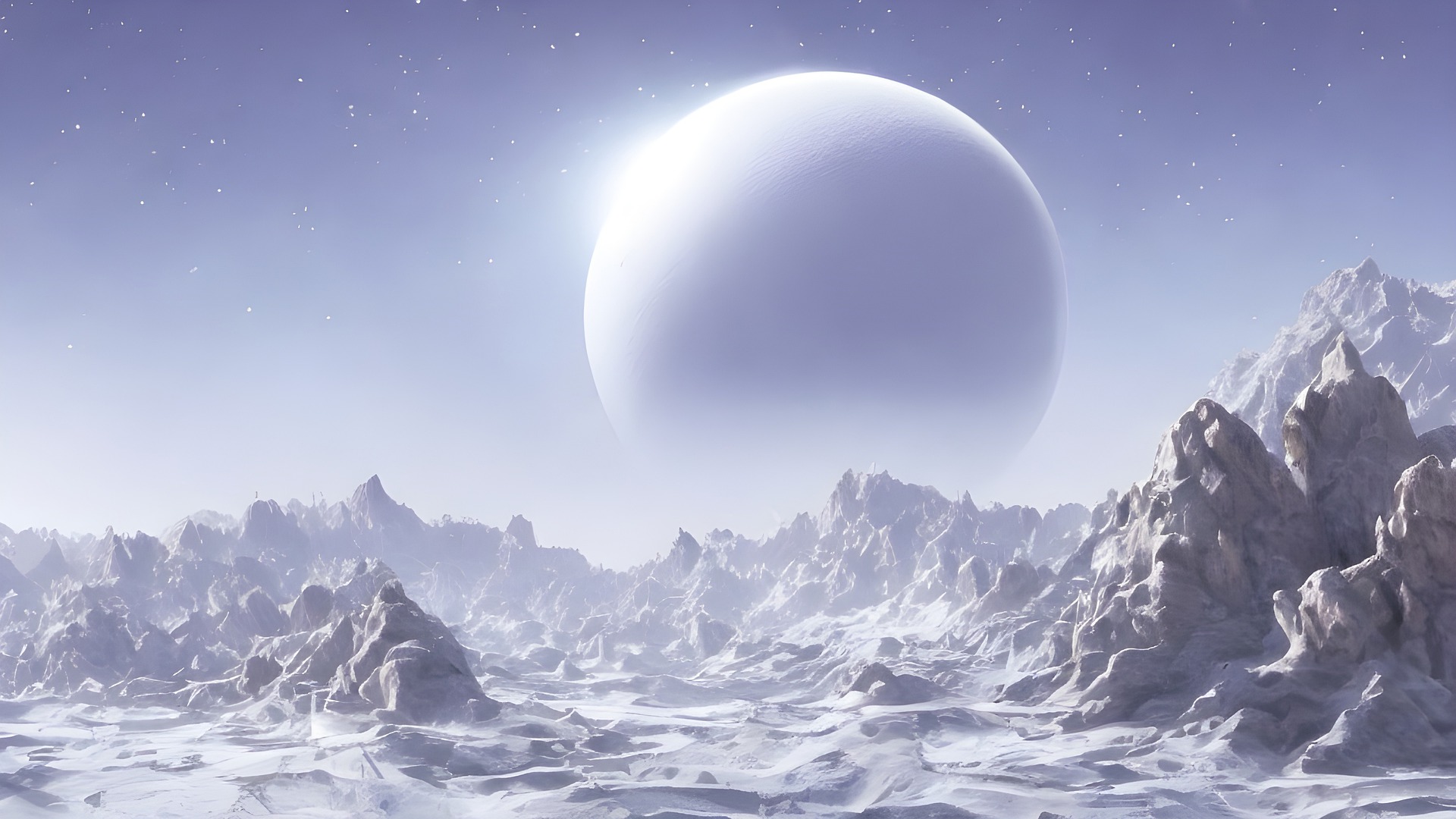
In the far reaches of our solar system, there’s a puzzling dwarf planet called 90377 Sedna. What makes it mysterious is its unusual egg-shaped orbit. It takes Sedna a whopping 11,400 years to complete one trip around the sun, which is one of the longest journeys of any object in our solar system. It starts at a significant seven billion miles from the sun, crashes through the Kuiper belt then goes even farther, up to 87 billion miles away, and finally, it swings back inwards towards a collection of icy objects called the Oort cloud. This whole setup has baffled astronomers because Sedna seemingly formed in a vast empty region many millions of miles from the influence of any of the big planets in our solar system.
Now, there’s a new theory suggesting that there might be another Earth-like planet out there in that distant region. Astronomers now say this hidden planet could be the reason Sedna and so many other icy objects out there have strange tilted orbits.
Two researchers, Takashi Ito and Sofia Lykawka, have used computer simulations to map how this hidden planet could affect the known icy objects in the Kuiper Belt and were pleasantly surprised to see that it could have the exact expected effect.
According to astronomers, this hidden planet would be somewhere between 1.5 to three times the size of Earth and would be located about 23 billion to 46 billion miles away from the sun.
The researchers wrote in their study, “It’s possible that a very old planet could still exist in the distant Kuiper Belt, just like many such objects existed in the early solar system.”
Looking for Hidden Planets
The idea of searching for planets in the distant parts of our solar system isn’t new. There’s a concept called “Planet Nine,” which is believed to be a planet ten times more massive than Earth. It’s thought to be responsible for some strange things happening in our solar system, like the odd orbits of certain objects in the Kuiper Belt. However, despite much interest, we haven’t actually found Planet Nine yet. If it exists, it could be somewhere between 37 billion to 74 billion miles away from the sun.
But not everyone agrees that Planet Nine is real. Some astronomers think that the strange orbits of objects in the Kuiper Belt might have other explanations, not necessarily tied to a hidden planet.
In 2021, an independent study argued that the data used to support the existence of Planet Nine might be biased, and it suggested that there’s a very low chance of such a planet being out there. In contrast to Planet Nine, the new idea of a “Kuiper Belt Planet (KBP)” as suggested by this new study is gaining far more traction.
It’s important to note that this potential Kuiper Belt Planet hasn’t been directly or indirectly observed yet insist the researchers, but if it is within 34 billion miles from the sun, there’s a 90% chance we could spot it in the sky one day.
However, more research is needed to understand the objects at the edge of the Kuiper Belt better and to confirm whether this Kuiper Belt Planet is real or not.

